RJ stands for Registered Jack and is a standardized network interface. RJ45 and RJ11 are two common types of connectors in our daily lives, with different structures and application ranges. They cannot be mixed, but many people are not aware of this, resulting in unnecessary equipment damage.
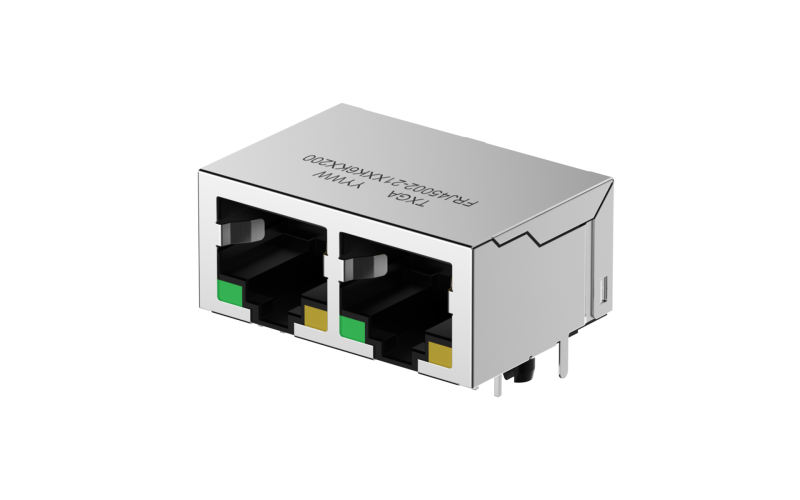
What is an RJ45 connector?
RJ45 connector is a type of connector with 8 pins, mainly used in Ethernet. "RJ" represents the registered socket, and "45" represents the serial number of the interface standard. RJ45 connectors are typically terminated on Ethernet cables and used to connect various network devices such as computers, routers, switches, etc.
What is RJ11 connector?
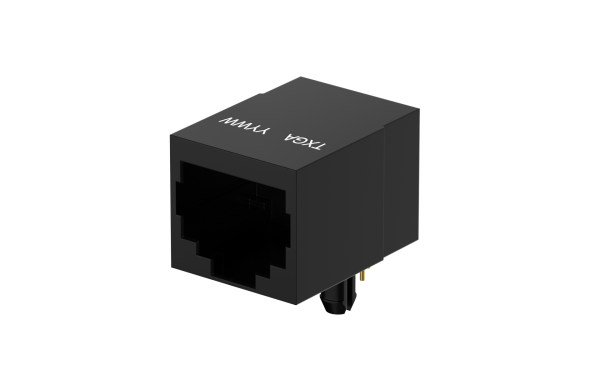
The RJ11 connector is similar to the RJ45 connector, but only has 4 pins and is commonly used to connect phones and modems. It should be noted that RJ11 usually refers to a 6-pin modular jack or plug, but only 4-pin is used. In addition, RJ11 is also used for 4-pin versions of modular connectors.
The main differences between RJ45 connectors and RJ11 connectors are as follows:
construction
The RJ45 connector is a connector with 8 grooves and 8 contacts (8p8c), while the RJ11 connector usually only has 6 grooves and 4 contacts (6p4c), so the volume of the RJ45 connector is larger than that of the RJ11 connector. RJ11 connectors can usually be inserted into RJ45 interfaces, otherwise they cannot. However, it is strongly recommended not to use RJ11 connectors for RJ45 interfaces.
Line sequence standard
Due to the different constructions of RJ45 connectors and RJ11 connectors, the wire sequence standards for their wiring are also different. RJ11 connectors generally only have 6 grooves and 4 contacts (6p4c), and their wire sequence is fixed. There are two wire sequence standards for RJ45 connector wiring: T-568A and T-568B. By adopting different standards, the resulting network cables are available in two types: straight through and cross type. If you want to make a straight through network cable, the two ends of the cable can be wired according to the same standard (T-568A or T-568B). If you want to make a crossover network cable, the two ends of the cable should be wired according to different standards.
application
RJ45 connectors are generally terminated at both ends of Ethernet cables to connect to network devices such as computers, while RJ11 connectors are terminated at both ends of ADSL and voice cables to connect to telephones or modems.
Although the RJ11 connector can be inserted into the RJ45 interface, the two cannot work together because the RJ11 connector is not an international standard, and its size, insertion force, insertion angle, etc. are not uniformly designed according to international standard connector requirements. If they are forced to be used together, it may damage the RJ45 interface of the device.
 Building Technology Cornerstone
 |
CNY
|
CNY