Analysis of key points in insertion and extraction force testing of pin and socket connectors
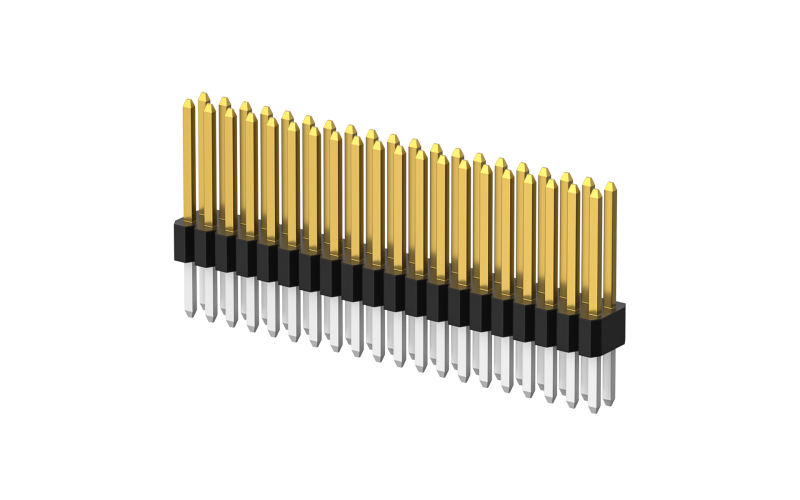
Pin Header Female Header, as extremely commonly used connectors and plug-ins in electronic industry products, are widely applied in board-to-board connection scenarios. However, due to factors such as their own spacing, pin count, and row count, their shape tends to be relatively elongated. During product use, vibrations and different force values generated by insertion and extraction operations can easily cause contact terminals to deviate from their normal working positions, leading to connector malfunction. Therefore, the insertion and extraction force testing of pin and socket connectors is of crucial importance. The following are the key points of insertion and extraction force testing for pin and socket connectors:
I. Clarify that the entire Pin Header Female Header product of the test object needs to be included in the testing scope, with particular emphasis on the mating contact points of the male and female connectors. This is the core part of the connector for achieving electrical connection, and its performance directly affects the overall functionality of the connector.
II. When determining the testing axis, the axis should be set to the direction in which the pin and socket connector product is actually used, so as to truly simulate the force conditions experienced by the connector in its actual working environment and ensure the accuracy and reliability of the test results.
III. Standardized Testing Speed Generally, unless there are specific requirements for particular pin and socket connector products, the testing speed is uniformly set at 25.4mm/minute. This standard speed helps to unify testing conditions, making test results between different products comparable.
IV. Setting the minimum value for destructive testing During destructive testing, according to the specifications, the minimum value is usually set to (4.9N Min) to ensure that the connector can maintain basic performance when subjected to a certain force, meeting the actual usage requirements.
 Building Technology Cornerstone
 |
CNY
|
CNY