
TXGA连接器厂家 Building Technology Cornerstone
{{ getLanguageDisplayName(lang) }} | CN | CNY
Your current browser version is too low or not supported. Please upgrade or change your browser. Recommended browsers: Chrome, Edge.
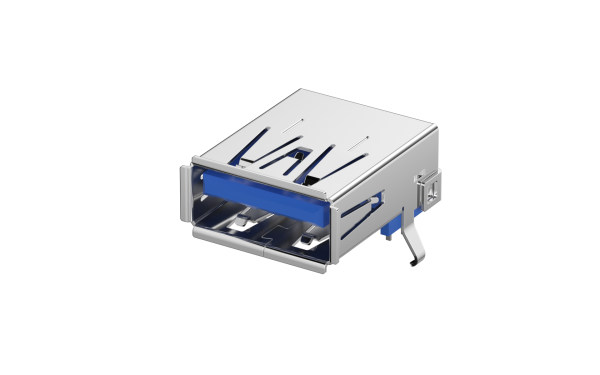
Why do USB A and USB B have the same electrical characteristics but different appearances?

USB, an abbreviation of "Universal Serial Bus" in English, serves as an external bus standard for regulating the connection and communication between computers and external devices. It is a widely used interface technology in the PC field. Among them, USB A and USB B are two types of connectors. Although they share the same number of pins and electrical characteristics, their mechanical shapes differ, reflecting unique design considerations.

The rectangular USB ports commonly found on our computers are typical USB A. In contrast, B-type sockets are mostly square in shape. This difference is not accidental, but intentional on the part of the designer, primarily to prevent users from mistakenly connecting one device to another, thereby avoiding short circuits.

From the perspective of usage scenarios, Type A receptacles (female connectors) are typically found on upper-end devices, such as hosts or hubs; whereas Type A plugs (male connectors) are more commonly used for cables or smaller peripherals, such as mice and flash drives. USB B is generally applied to the connection of devices such as 3.5-inch mobile hard drives, printers, and monitors.

Both USB A and USB B have occupied an important position in the computer ecosystem and have been widely used. However, nowadays, they are both facing the challenge from the Type-C interface. With the continuous pursuit of thinner, lighter, more portable, and more efficient electronic products, it may only be a matter of time before USB A and USB B exit the historical stage.