
TXGA连接器厂家 Building Technology Cornerstone
{{ getLanguageDisplayName(lang) }} | US | USD
Your current browser version is too low or not supported. Please upgrade or change your browser. Recommended browsers: Chrome, Edge.
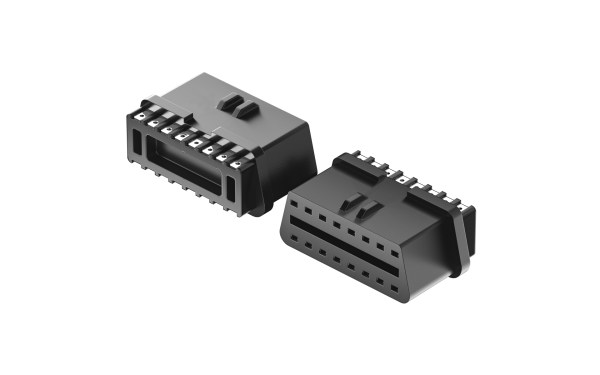
Production Details of TXGA OBD Connectors

The OBD connector is the core data transmission interface of the in vehicle diagnostic system, which can output vehicle operation data and provide hardware support for vehicle maintenance, modification, and function development. It is a key component to ensure the OBD system achieves fault diagnosis, remote control, and other functions. Its production quality directly determines the stability of the in vehicle system operation.

Disassemble the core production process of OBD connectors:

Terminal stamping: As the foundation of data transmission stability, TXGA uses high-speed precision stamping machines to process copper strips, producing high-precision terminals that are then electroplated and cut to predetermined lengths.

Injection molding process: The terminal is accurately placed in the reserved position of the mold, and the injection molding machine automatically closes and injects the material. After the molten material cools and solidifies, the terminal is firmly embedded with the plastic body to ensure the appearance accuracy and mechanical strength of the product.

Through hole welding: The fully automatic welding machine visually locates and firmly welds the connector pins to the PCB board, with full and defect free solder joints, avoiding problems such as poor reliability and short lifespan caused by poor welding.

Assembly process: The high-precision press machine automatically presses the spring with a concave structure, which can firmly hold the plug during insertion, greatly improving the retention force of the male and female heads.

After completing the testing, a compliant OBD connector is born.

At present, TXGA's OBD connectors are mainly used in OBD automotive diagnostic equipment, providing reliable connection solutions for automotive fault diagnosis, performance testing, etc.