Please confirm your language, ship to and currency
Shipping options and costs will vary based on your ship to
Writer:D形连接器 Posted time {{1789353624000|timezoneDate({format:'YYYY-MM-DD HH:mm:ss'})}} views:4
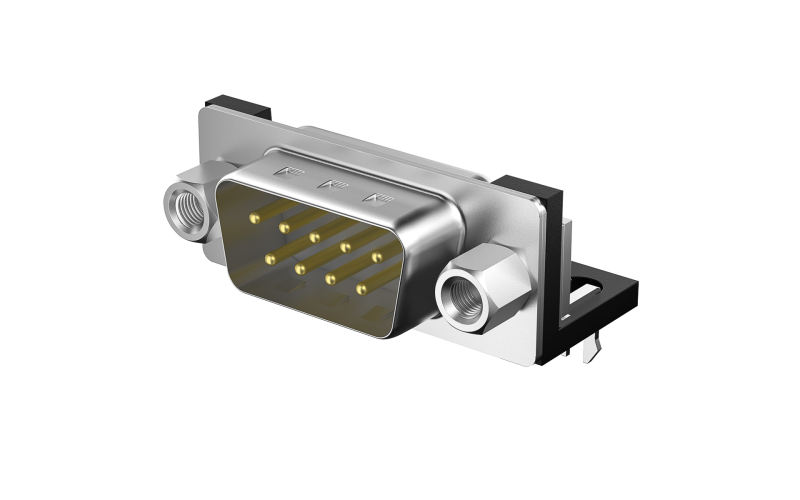
The D-SUB connector, named after its D-shaped metal shielding shell, has long been extended from computer peripherals to industrial automation, communication equipment, instrumentation, and many other fields. It is a widely used interface type in high reliability scenarios.
The core processing technology of its pin needles is divided into two categories: turning needles and punching needles:
The car needle is made of solid pins processed by a lathe, with a stable overall structure that is not easily deformed and has a longer insertion and removal life. The contacts can achieve a more uniform 0.75 μ m gold plating layer coverage, with excellent conductivity and lower contact resistance. It can maintain signal continuity and stability under harsh conditions such as long-term vibration and high dust.
Punching needles are formed by precision punching machines and belong to hollow structures. They have slightly lower structural rigidity and long-term transmission stability than needle turning solutions, resulting in higher production efficiency and easier cost control.
The products of two types of processes form a clear scene stratification: the car needle model has more outstanding comprehensive performance and is suitable for scenarios with strict reliability requirements such as industrial automation, energy and power, and high-end equipment; The punching needle model, with its high cost-effectiveness advantage, is widely used in conventional commercial grade equipment and cost sensitive general signal transmission scenarios.