As the wind power industry advances toward higher reliability, lower maintenance costs and higher power output, wind turbine control cabinets operate in harsh field conditions featuring intense vibration, wide temperature fluctuations and severe electromagnetic interference. Conventional standard connectors are prone to loose interfaces and signal disconnections induced by vibration, which directly lead to abnormal data collection of control cabinets, false triggering of protection systems and unplanned unit shutdowns, ultimately dragging down the Overall Equipment Effectiveness (OEE) of cabinet equipment.
To address this industry pain point, TXGA has launched the FDB Series D-Sub Connectors. With targeted structural optimization and strong adaptability to extreme environments, these connectors reduce OEE loss of wind turbine control cabinets resulting from vibration-induced connection failures by 90%, delivering an ideal stable interconnection solution for wind power applications.
The operating environment of wind turbine control cabinets imposes far stricter reliability requirements on connectors than ordinary industrial scenarios. Wind turbine cabinets sustain continuous high-frequency vibration during operation. After long-term vibration shock, traditional D-Sub connectors easily suffer loose contacts and signal loss. Minor issues cause abnormal collection of unit condition monitoring data and misjudgment by operation & maintenance systems; severe faults trigger emergency shutdown of turbine cabinets, driving up maintenance expenses and power generation losses drastically.
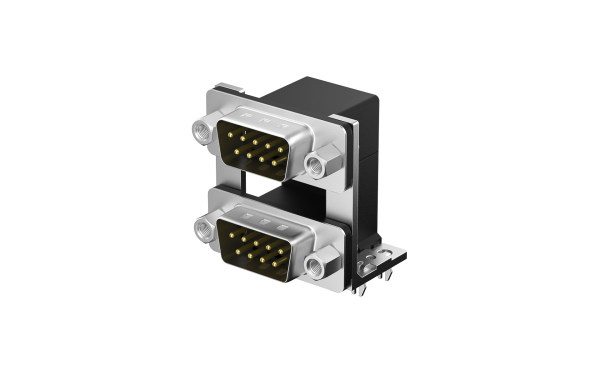
Specially engineered for harsh industrial environments, TXGA FDB Series D-Sub Connectors adopt a 4-screw locking structure and through-hole soldering mounting method to fundamentally restrain connection failures caused by vibration. They are well-suited for complex wind farm operating conditions including high-altitude low air pressure, coastal salt fog, extreme cold and high temperature with huge temperature differences, perfectly overcoming the drawbacks of ordinary connectors used in wind power systems.
Core Performance of FDB Series D-Sub Connectors for Severe Wind Power Working Conditions
Vibration-Resistant Anti-Loose Design
Equipped with an integrated 4-screw locking structure and through-hole soldering design, the connectors maintain stable connections under strong vibration at frequencies ranging from 10 Hz to 2000 Hz and acceleration up to 196 m/s². They drastically eliminate poor contact and signal disconnection triggered by vibration, and greatly reduce the probability of unplanned shutdowns of wind turbine control cabinets due to connection defects.
Stable & Flexible Mounting Compatibility
The through-hole soldering design enables firm interconnection with PCBs of wind power equipment. It supports interface retrofits for various subsystems including pitch control systems, slip rings, nacelle control cabinets and condition monitoring sensors. On-site upgrades require minimal modification to original equipment structures, cutting retrofit costs significantly.
Excellent Adaptability to Extreme Environments
The connectors operate stably within a temperature range of -40°C to +105°C and pass rigorous salt spray testing. They deliver consistent reliable connection performance during long-term outdoor deployment across coastal, plateau and desert wind farm sites.
Compliance with Global Industry Standards
The product complies with multiple international standards including IATF 16949, RoHS and UL. Its housing is made of UL94 V-0 flame-retardant PBT resin. Rated current reaches 3A and rated voltage is 250V. Stable performance throughout the full service life provides solid underlying interconnection support for long-term operation of wind turbine control cabinets.
Replacing conventional standard connectors with TXGA FDB Series D-Sub Connectors effectively cuts the frequency of on-site maintenance visits caused by connection faults for wind turbine control cabinets, lowering safety risks and labor costs of high-altitude operations. From the perspective of signal transmission links, improved connection reliability directly reduces turbine shutdowns and derating operation triggered by signal interruption. In turn, OEE loss of wind turbine control cabinets from vibration-related connection faults is reduced by 90%, substantially lifting the annual effective operating hours and power generation output of wind turbines.
 Building Technology Cornerstone
 |
CNY
|
CNY